
Leadership Under Crisis: What 9/11 Still Teaches Business About Decisions, Communication, and Courage
Why September 11 remains one of the clearest lessons in leadership under pressure, organizational resilience, crisis communication, executive judgment, and the cost of hesitation
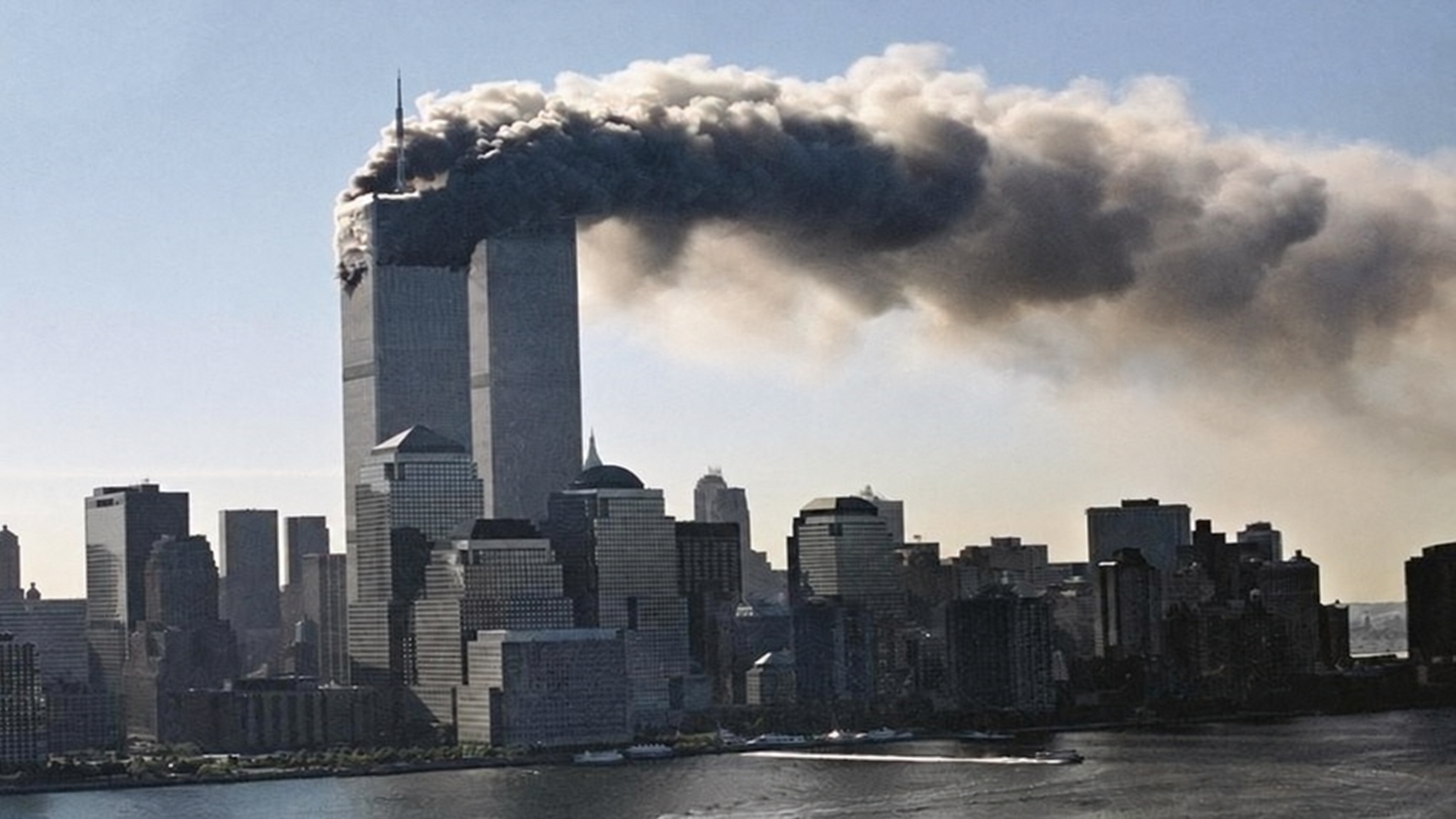
Lower Manhattan on September 11, 2001, moments after the attacks began—an image that captures the scale of uncertainty, urgency, and human consequence that still shapes how we think about leadership, crisis communication, preparedness, and decision-making under pressure.
September 11, 2001 was not a business case study. It was a national tragedy that killed thousands of people, devastated families, transformed New York City, and changed the United States permanently. But more than two decades later, the day still offers profound lessons about leadership because catastrophe strips away performance, title, hierarchy, and theory. In a crisis, leadership becomes brutally visible. People either communicate or they do not. They either make decisions or they freeze. They either take responsibility or hide behind process. They either protect people or protect themselves. Corporate leadership training, executive development, management consulting, organizational development, crisis leadership, and business continuity all become much more real when the environment stops being predictable. September 11 showed what happens when ordinary assumptions collapse in minutes and people are forced to lead without the luxury of certainty.
Crisis Does Not Wait for Leadership to Feel Ready
One of the most dangerous assumptions inside any organization is that leaders will somehow rise to the occasion because their title requires it. Crisis does not work that way. When the environment changes suddenly, leaders do not magically become clearer, calmer, or more decisive. They tend to fall back on whatever has already been trained into them. If they normally avoid difficult decisions, they may avoid them under pressure. If they normally communicate poorly, crisis magnifies the confusion. If they normally require perfect information before acting, uncertainty can paralyze them. Executive development matters because leaders need to build judgment before the crisis arrives. The worst possible moment to discover that someone cannot make a decision without complete information is when complete information is impossible.
Information Becomes Imperfect Exactly When It Matters Most
During a major crisis, information is often incomplete, contradictory, delayed, or wrong. That creates one of the hardest leadership conditions imaginable: decisions still have to be made. Business leaders experience smaller versions of this constantly. A major customer may disappear. A cyberattack may begin. A key executive may resign. A facility may fail. A legal problem may surface. A market may shift. A supplier may collapse. A public relations crisis may explode before leadership understands what actually happened. Management consulting and crisis leadership should prepare organizations to distinguish between information that is necessary and information that is merely comforting. Waiting for certainty can feel responsible while actually becoming another form of delay.
The First Responsibility Is Clarity
In unstable situations, people look upward. They want to know what is happening, what matters now, what they are expected to do, and whether leadership has control of the situation. Silence creates stories. Vague communication creates more stories. Contradictory messages create panic, mistrust, and wasted movement. Strong crisis communication does not require pretending to know everything. It requires saying clearly what is known, what is not known, what is being done, and what people should do next. Corporate leadership training should teach leaders that clarity under pressure is not about sounding polished. It is about reducing unnecessary uncertainty so the organization can function.
Leadership Becomes Physical in a Crisis
Leadership is often discussed as strategy, communication, vision, and influence. In a real crisis, leadership becomes physical. Someone has to enter the room. Someone has to make the call. Someone has to move toward the problem. Someone has to remain present while everyone else is overwhelmed. The first responders who moved toward danger on September 11 demonstrated the most extreme form of that principle. Business leadership obviously operates in a different context, but the underlying lesson still matters. Employees notice who disappears when pressure rises and who remains available. Presence under pressure builds credibility in a way no mission statement ever can.
Courage Is Not the Absence of Fear
Courage gets romanticized because people imagine courageous leaders as people who simply are not afraid. Real courage is usually the opposite. The person understands the danger, understands the consequences, and acts anyway because the responsibility is larger than the discomfort. That distinction matters in business. A leader may need to terminate someone they like, confront a failing executive, disclose a serious problem, shut down an operation, reverse a bad strategy, or tell a board something nobody wants to hear. Executive judgment is not only knowing what should happen. It is having enough courage to act once you know.
Hierarchy Can Help or Hurt
Organizations need hierarchy because somebody ultimately has to decide. But hierarchy becomes dangerous when information cannot move upward quickly or when lower-level employees are trained to wait for permission in situations that demand immediate judgment. Organizational development should create clear authority while also giving competent people enough decision latitude to act when delay creates risk. In a crisis, the person closest to the problem may have the best information long before senior leadership does. Companies that centralize every meaningful decision can become dangerously slow when conditions change faster than information can travel.
Training Reveals Its Value When the Script Breaks
A lot of corporate training is built around normal conditions. Here is the procedure. Here is the communication model. Here is the escalation path. Here is the workflow. Those systems matter, but crisis exposes whether people understand principles or merely memorize procedures. When the script no longer fits reality, judgment has to take over. Strong corporate training should develop adaptability, pattern recognition, communication discipline, emotional regulation, and decision-making under uncertainty. The objective is not to teach people every possible scenario. That is impossible. The objective is to develop people who can still function when the scenario is one nobody predicted.
Emotional Regulation Is a Leadership Skill
People take emotional cues from leaders. A panicked leader can spread panic faster than bad news. A detached leader can create the impression that the danger is not understood. Strong crisis leadership requires a balance between urgency and regulation. The leader has to recognize the seriousness of the situation without becoming psychologically captured by it. That does not mean becoming robotic. It means remaining functional enough to think, communicate, prioritize, and make decisions while everyone else is processing the same uncertainty. Executive development should treat emotional regulation as an operational capability, not a personality trait.
Priorities Become Obvious When Everything Else Falls Away
Normal business life can become clogged with secondary priorities. Meetings multiply. Reports multiply. Internal politics multiply. Departments defend territory. Executives become attached to projects because they sponsored them. Crisis has a way of cutting through that noise. Suddenly the important questions become obvious. What protects people? What keeps the organization functioning? What has to happen next? What can wait? Business strategy consulting should help companies develop that same discipline before catastrophe forces it on them. A company should not need a crisis to discover what actually matters.
Trust Is Built Before the Emergency
Nobody can manufacture trust in the middle of a crisis. Employees already have an opinion about leadership by the time something goes wrong. They know whether executives tell the truth. They know whether management protects itself. They know whether bad news gets punished. They know whether promises mean anything. When leadership asks people to follow difficult instructions during a crisis, that history matters. Organizational trust is accumulated through hundreds of ordinary decisions long before it becomes necessary in an extraordinary one. Corporate consulting should help leadership understand that credibility is operational infrastructure.
Culture Determines What People Do When Nobody Has Time to Ask Permission
Culture becomes visible when procedures stop covering every possibility. Do people protect customers or protect themselves? Do they share information or hoard it? Do they tell leadership what is actually happening or what leadership wants to hear? Do they step forward or wait to be told? Corporate culture is not primarily the values written on a wall. It is the collection of behaviors people believe are safe, rewarded, expected, and tolerated. In crisis, those beliefs become actions very quickly.
The Best Leaders Shorten the Distance Between Reality and Decision
Organizations become fragile when too many layers exist between what is happening and the person who can act. Information gets softened as it moves upward. Problems become presentations. Presentations become meetings. Meetings become committees. By the time somebody finally decides, reality has moved again. Management consulting should help companies shorten that distance. Leaders need accurate information quickly, and employees need clear decisions quickly. The faster reality can reach leadership and leadership can respond to reality, the more resilient the organization becomes.
Neuro-Linguistic Programming Can Improve Communication Under Pressure
Language matters more when people are afraid. Vague statements become dangerous. Ambiguous instructions create hesitation. Overly complex explanations overload attention. Neuro-Linguistic Programming business consulting can help leaders become more precise about how messages are framed, how assumptions are communicated, how instructions are structured, and how people interpret language under stress. In normal conditions, unclear communication creates frustration. In crisis, unclear communication can create real operational risk. Strong leaders learn to make language simpler, more concrete, and more actionable as pressure increases.
Crisis Leadership Requires Decision Ownership
One of the most corrosive behaviors in a crisis is decision avoidance disguised as collaboration. More people get added to the conversation. More opinions are requested. More information is collected. Nobody wants to own the risk. Eventually, delay becomes the decision. Strong executive leadership requires somebody to say, “This is what we are doing.” That person may still be wrong. Leadership does not guarantee perfect outcomes. It creates accountability for imperfect decisions made in imperfect conditions. Executive development should prepare leaders to own decisions without hiding behind consensus when consensus is impossible.
Resilience Is Not Bouncing Back to What Existed Before
Organizations often talk about resilience as returning to normal. That definition is too small. After a major disruption, the old normal may no longer exist. Resilience means adapting to reality as it is now. September 11 permanently changed security, travel, emergency planning, government policy, risk management, and the way organizations thought about vulnerability. Businesses face their own versions of irreversible change. Markets shift. Technology changes industries. Regulation changes economics. Customers change behavior. Business continuity and organizational development should help companies adapt rather than waste energy trying to recreate a world that has already disappeared.
Institutional Memory Matters
One of the recurring failures inside organizations is forgetting lessons once the emotional intensity fades. A crisis happens, everyone promises change, procedures are rewritten, attention increases, and then normal life slowly returns. Over time, urgency disappears and old habits come back. Institutional memory matters because the purpose of studying failure is not to live in fear. It is to avoid paying for the same lesson twice. Leadership teams should periodically revisit major failures, near misses, and disruptions and ask whether the organization actually changed or simply recovered.
Business Continuity Is a Leadership Issue, Not an IT Folder
Too many organizations treat business continuity as documentation. There is a plan somewhere. There are phone numbers. There are backups. Someone reviewed it last year. Real continuity planning asks harder questions. Who decides if leadership is unavailable? What happens if the building cannot be used? How does communication continue? Which operations matter first? Who has authority to stop work? How does the company protect employees? What happens if technology fails? Crisis planning becomes meaningful only when leaders understand their role inside the plan and have practiced enough that action is possible under pressure.
September 11 Changed the Meaning of Preparedness
The events of September 11 forced institutions across the country to reconsider threats they had previously treated as remote or improbable. That lesson applies far beyond terrorism. Organizations routinely underestimate low-probability, high-impact events because thinking about them feels excessive until they happen. Strong risk management does not mean becoming paranoid. It means identifying vulnerabilities that could threaten people, operations, reputation, or survival and deciding in advance how much preparation those risks deserve. Executive judgment includes knowing which unlikely events are too consequential to ignore.
Leadership Under Pressure Reveals Character
Crisis has a way of stripping away branding. People stop caring about the leadership book on the shelf or the speech from the last company retreat. They watch behavior. Who communicates? Who takes responsibility? Who tells the truth? Who protects people? Who makes decisions? Who disappears? Who blames? Who remains calm enough to function? Those moments become part of the organization's memory long after the crisis ends. Leadership development should prepare people for that reality because credibility can take years to build and minutes to destroy.
Corporate Leadership Training in Syracuse, Manhattan, Kansas City, and Miami
Destiny Success and Development works with companies and leaders in Syracuse, Manhattan and New York City, Kansas City, Miami, and beyond through corporate consulting, management consulting, corporate leadership training, executive development, management development, organizational development, business continuity strategy, crisis leadership, business strategy consulting, and Neuro-Linguistic Programming business consulting. The objective is not to make leaders fearful of the next crisis. It is to help organizations develop the judgment, communication, accountability, adaptability, and leadership capacity required when normal assumptions stop working.
Remember the Day, Learn the Lesson
September 11 should never be reduced to a corporate metaphor. The human loss is too great, and the courage demonstrated that day belongs first to the people who lived it, responded to it, and carry its consequences. But remembrance can include learning. The day showed the world how quickly certainty can disappear, how much leadership matters when it does, and how ordinary people can become extraordinary when responsibility suddenly becomes immediate.
The lesson for leaders is not to live expecting catastrophe. It is to build organizations capable of facing reality when reality does not arrive according to plan.
Your first conversation is always free. Schedule your free business screening with Destiny Success and Development today.